For decades, African agriculture has relied on experience, intuition and manual inspections to manage crops. Today, that is changing rapidly as drones become one of the most valuable tools available to modern farmers.
Across Africa, commercial farms and small-scale producers alike are discovering that drone technology isn’t simply about taking impressive aerial photographs—it’s about making smarter decisions that increase yields while reducing costs.
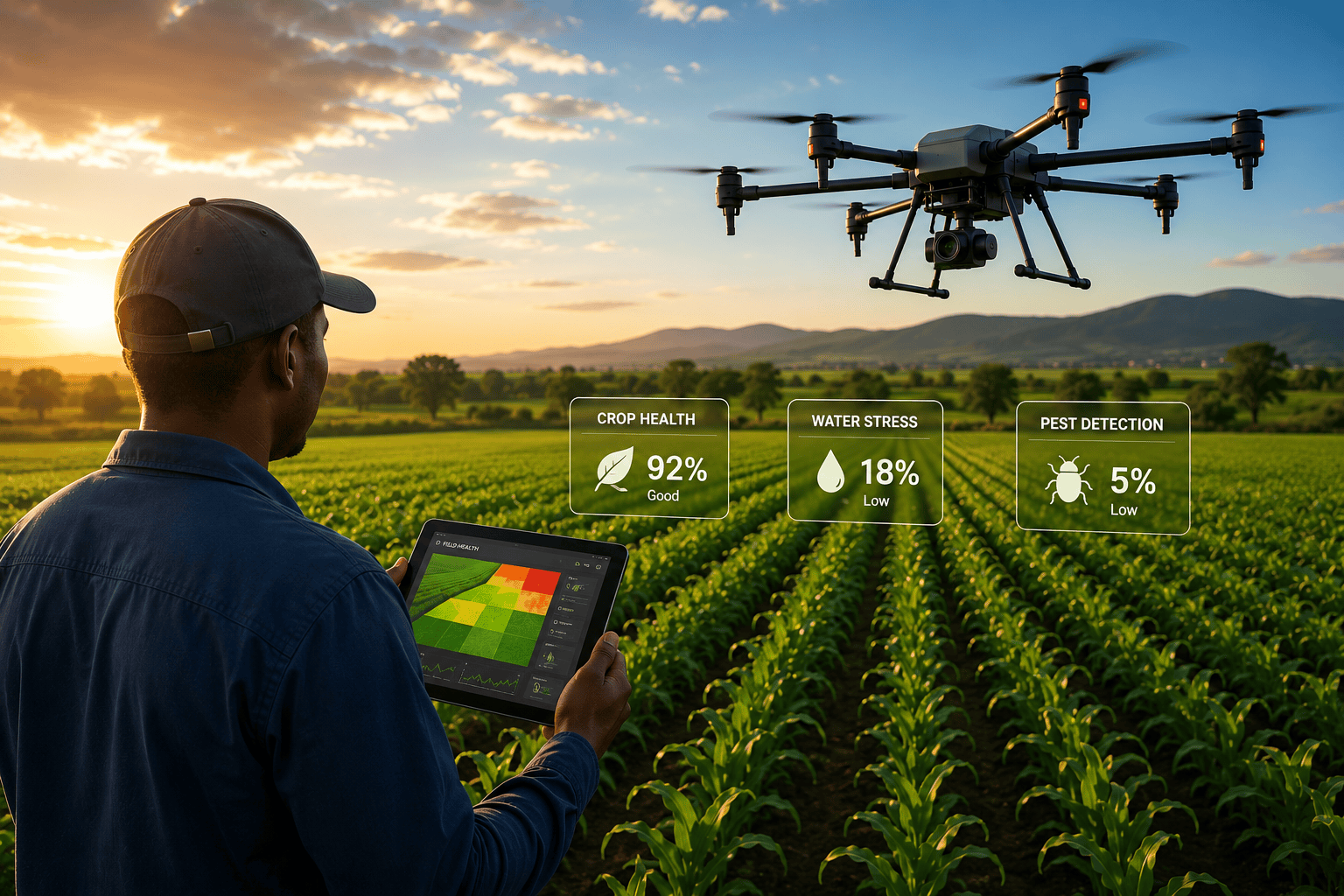
A drone equipped with advanced imaging sensors can survey hundreds of hectares in a fraction of the time it would take someone on foot. Instead of walking field after field searching for problems, farmers can identify areas affected by water stress, pest infestations, nutrient deficiencies or poor crop health before they become visible to the naked eye.
This early detection allows farmers to act quickly, preventing small issues from becoming major financial losses.
Another major advantage is precision farming. Rather than applying fertiliser or pesticides across an entire field, drone data allows treatment to be targeted only where it is needed. This reduces chemical usage, lowers operating costs and supports more sustainable farming practices.
In countries where labour shortages and unpredictable weather continue to challenge agricultural production, drones are providing farmers with faster access to accurate information that helps them plan irrigation, monitor crop growth and forecast harvests more effectively.
As drone technology becomes more affordable, we are seeing increasing interest from commercial farms, horticultural producers, tobacco growers, vineyards and even conservation agriculture projects throughout Southern Africa.
The future of African agriculture will not simply be about working harder—it will be about working smarter.
And drones are quickly becoming one of the most valuable tools helping farmers achieve exactly that.

Leave a Reply