Africa’s energy infrastructure is expanding rapidly.
From electricity transmission lines and substations to solar farms and hydroelectric facilities, keeping these assets operating safely has become more important than ever.
Traditionally, inspecting power infrastructure required teams to climb towers, travel long distances or hire expensive helicopters. These inspections could take days and often exposed workers to unnecessary risk.
Today, drones are changing that.
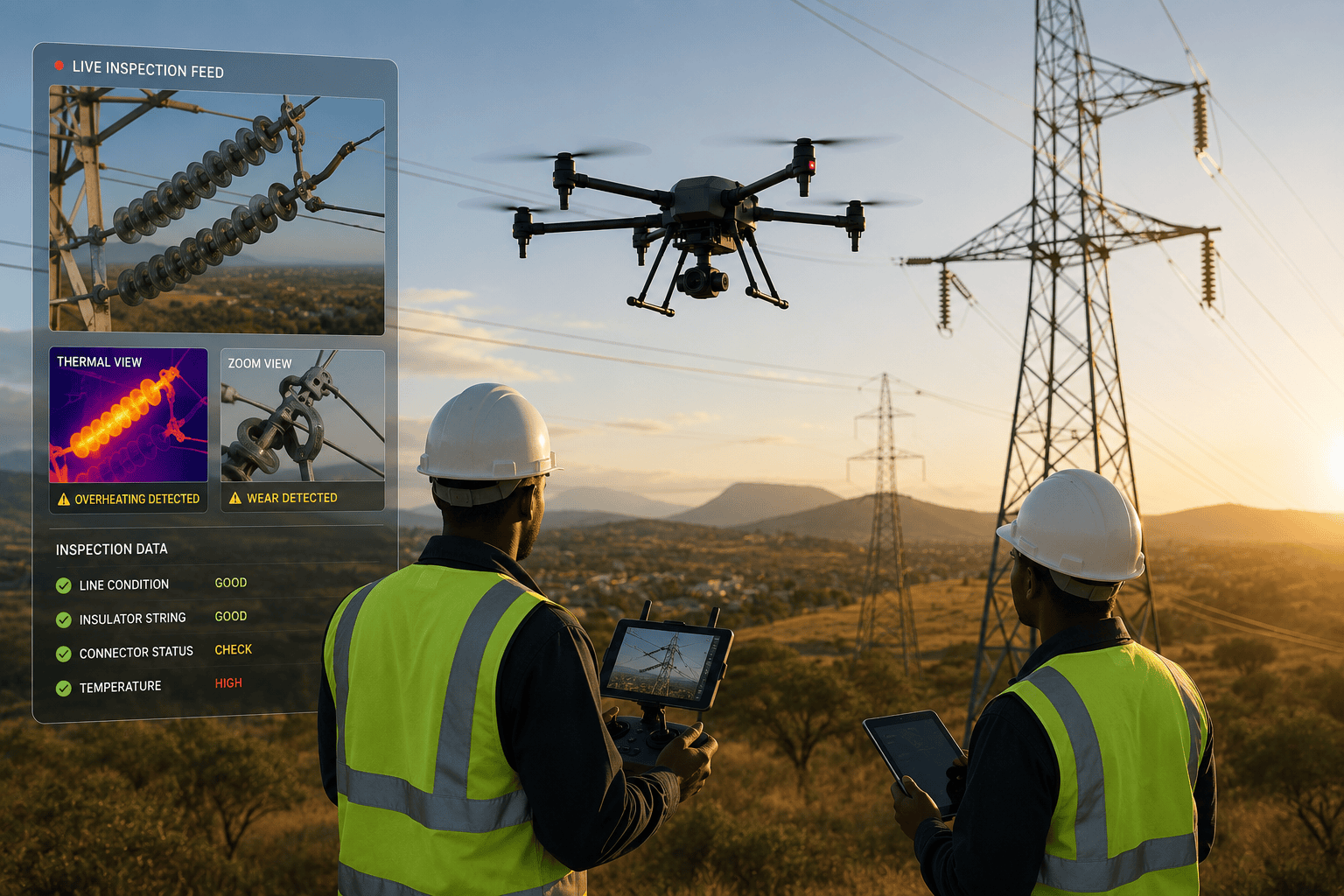
High-resolution cameras, thermal sensors and zoom technology allow drone pilots to inspect power lines, transformers, substations and solar panels without interrupting operations.
A single drone flight can identify damaged insulators, overheating electrical components, loose connections, vegetation encroachment and storm damage long before they lead to costly outages.
For solar farms, drones fitted with thermal cameras can quickly identify defective or underperforming solar panels that may be reducing energy output. What would once have taken technicians several days to inspect manually can now be completed in just a few hours.
This approach not only improves safety by keeping workers on the ground but also enables maintenance teams to prioritise repairs based on accurate data.
As Africa continues investing in renewable energy and expanding national power grids, drone inspections are becoming an essential part of preventative maintenance programmes.
Rather than waiting for infrastructure to fail, organisations can identify problems earlier, reduce downtime and extend the lifespan of critical assets.
The result is safer infrastructure, lower maintenance costs and more reliable energy for communities across the continent.

Leave a Reply